POLLEN HOOKER TASMANIA 1

  December 2023

You may need to adjust the zoom on your browser to view the whole page
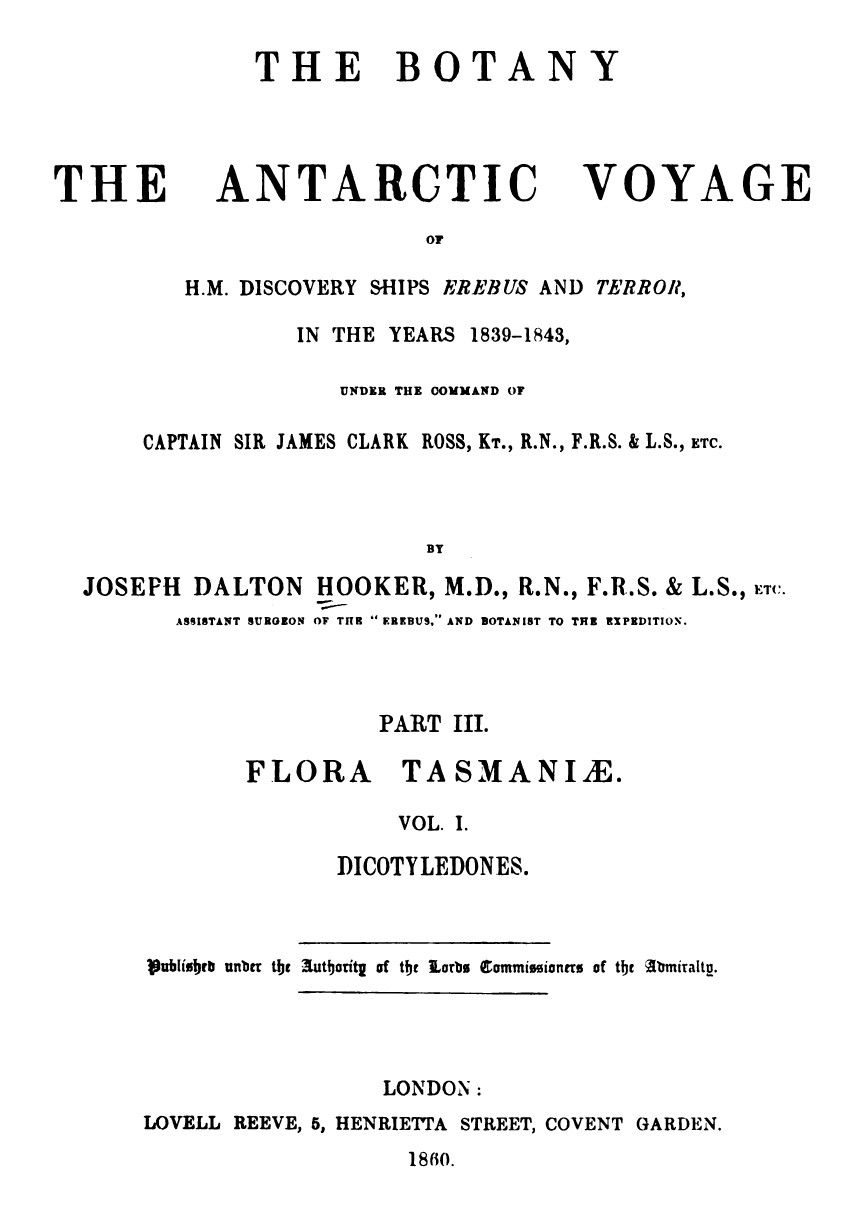
Title Page Volume I

The e-book from which these extracts are taken was found in several internet sites. This one is both volumes (I & II) in one e-book from Google.

Notes on the layout:

  • The title for Tasmania is printed as 'PART III'
    However, in the text of this volume and in other searches it was found as PART IV.
  • The two volumes are printed in the .pdf together so there are two sets of page numbers.
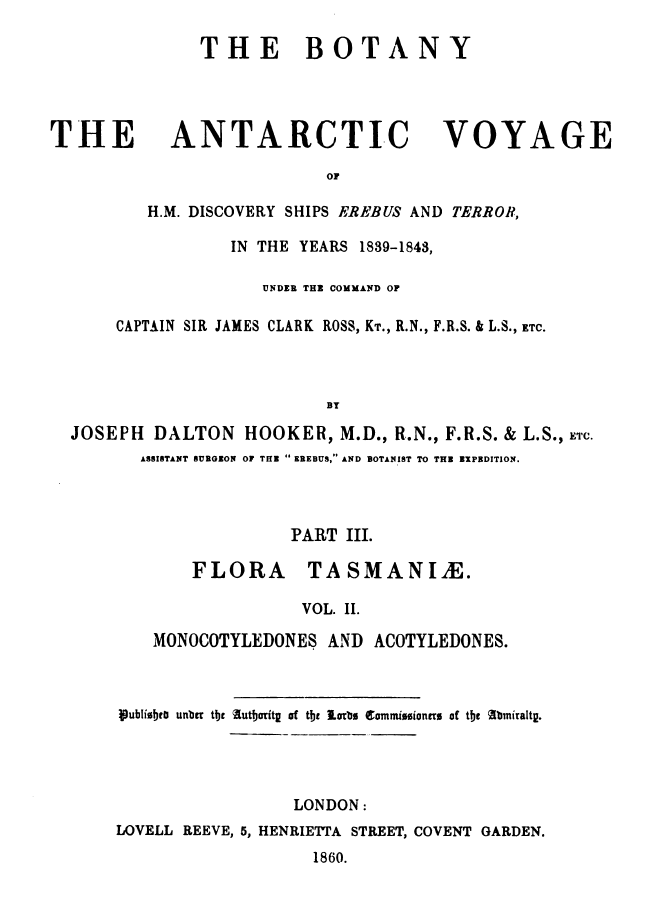
    Therefore both title pages are shown here.
  • References to plates (illustrations) were found in the text. However, these
    are not present in this copy.
 1
V:40:20:40:620:20:H:56:616:28:616:56

.

 Pollen Hooker Tasmania 1

Title Page Volume II

Both volumes are dated 1860 from surveys carried out in the years 1839 to 1843. Hooker's work has been extensively studied by Eleanor Cave at the University of Tasmania. This short extract from page 122 describes the introduction of Polygonum adpressum to Hobart.

"P. adpressum was a plant that greatly interested European settlers, as its fruit was recognized as a mild astringent, and was sometimes eaten by convicts at Macquarie Harbour to combat scurvy. In Hobart Town the plant had been readily adopted as a fast-growing ornamental climber, and as Hooker reported in his description, was used in tarts.Its ornamental quality was captured in the illustration, with dark green arrowshaped leaves, contrasting yellow stipules, small white starry flowers and pendants of round white fruit with a blush of pink. In the bottom left corner the words ‘Dr. J. Scott delr .’ are printed attributing the illustration to him. Hooker’s text reinforced the point: ‘Dr. Wilson has lately been kind enough to present us with some beautiful drawings, made by Dr. J. Scott in Van Diemen's Land"
 2
V:40:20:660:20:H:56:616:28:616:56

.

 Pollen Hooker Tasmania 1

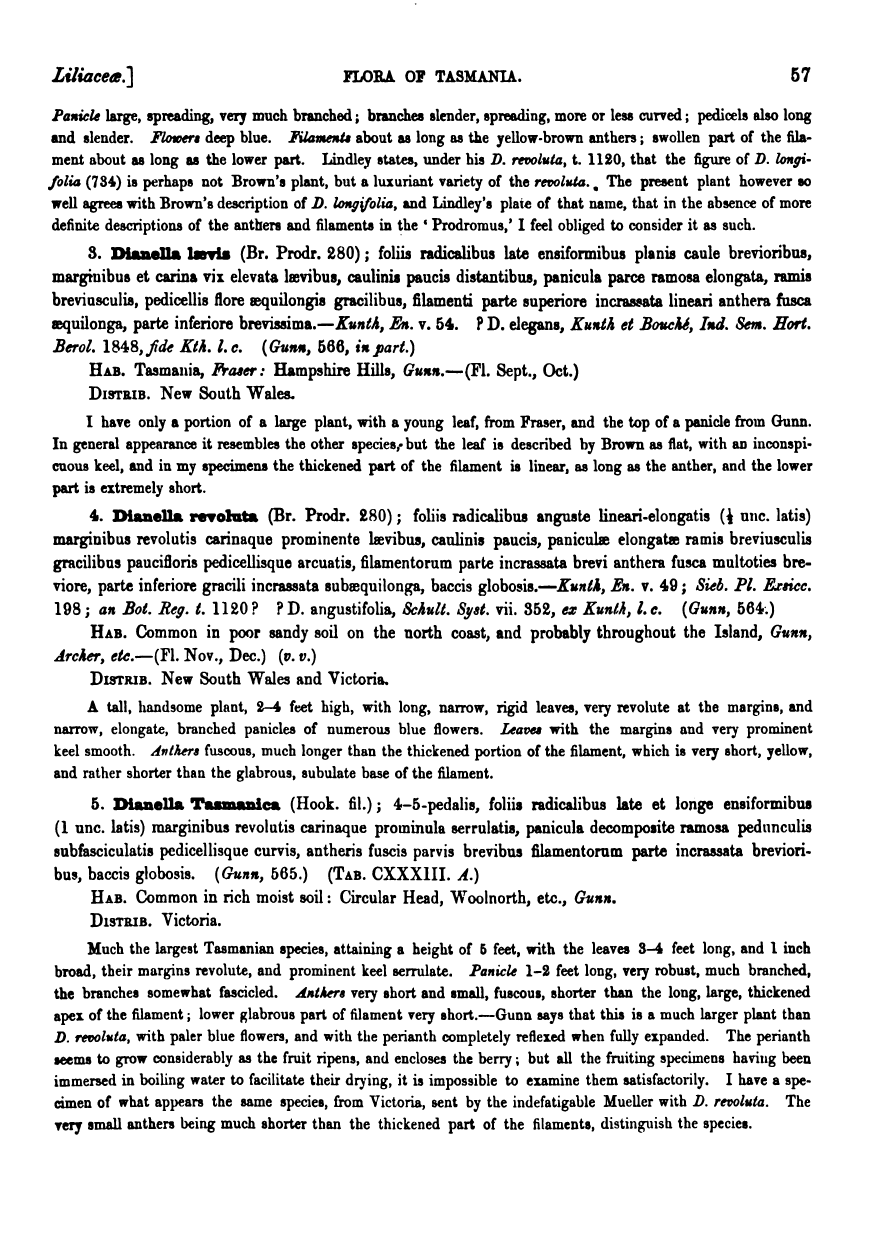
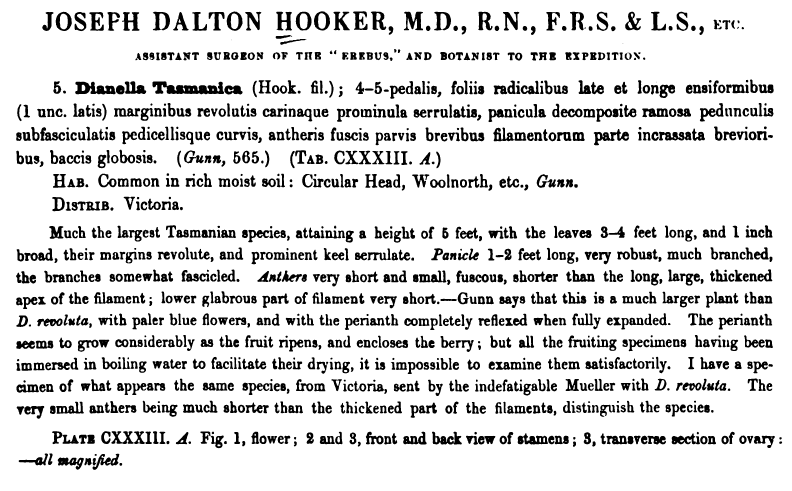
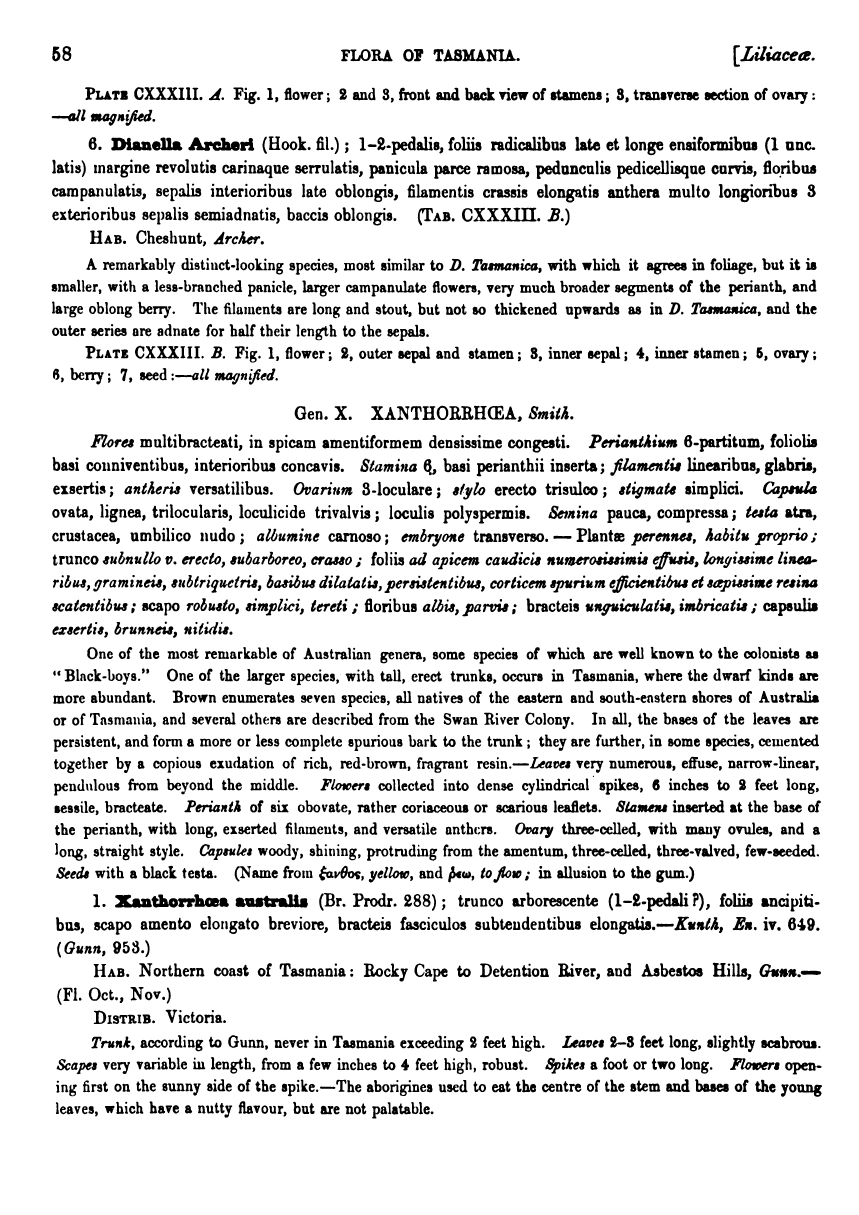
Dianella Tasmanica - volume II page 57

This species is described by Hooker in volume II. He wrote, "Much the largest Tasmanian species...", thus indicating that it was present in Tasmania in the 1850's.

{short description of image}

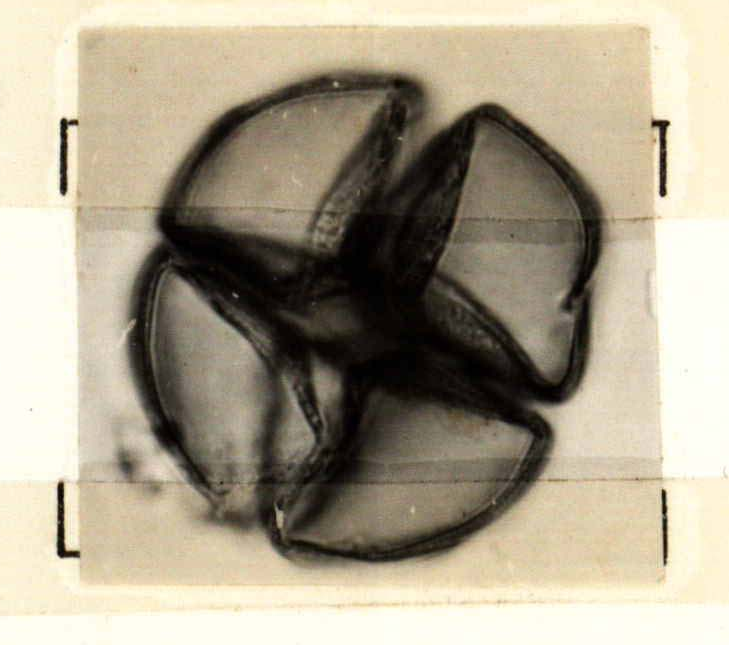
In the APSA pollen catalogue Dianella Tasmanica is recorded on a card entry: APSA catalogue entry for Dianella Tasmanica (probably drawings but may be photographs). Number 5 on the card appears to be a pollen mothercell. This pollen mothercell was found under the repair on 'Squall at St. Vincent's Rock, Bristol'.

<APSA ... <Found on canvas ... See them together

The APSA card shows the pollen size as 28.5 x 24.5 microns but the mothercell is drawn larger at about 50 microns which is similar to the 'Squall at St. Vincent's Rock, Bristol' specimen. See its location on the canvas.

 3
V:40:20:660:20:H:56:616:28:616:56

.

 Pollen Hooker Tasmania 1

Pollen specimen data for USN000-003

 4
V:40:20:660:20:H:56:616:28:616:56

.

 Pollen Hooker Tasmania 1

 5
V:40:20:660:20:H:56:616:28:616:56

.

 Pollen Hooker Tasmania 1

 6
V:40:20:660:20:H:56:616:28:616:56

.

 Pollen Hooker Tasmania 1

 7
V:40:20:660:20:H:56:616:28:616:56

.